

GUEST POST
How can students avoid the trauma of having to resit GCSE English Language?

Nick is a Cambridge graduate and GCSE English tutor who specialises in preparing Year 10-11 students for English Language with examiner-focused techniques. This article explains why students often miss grade 4 in GCSE English Language, how exam skills and time management make the difference, and practical steps to avoid a resit.
By Nick Y | GCSE English Language Specialist | Sherpa Tutor
How Can Students Avoid the Trauma of Having to Resit GCSE English Language?
By Nick Y | Cambridge-educated English tutor | Sherpa Tutor
The latest (summer 2026) GCSE results have put renewed focus on the pressure students face to achieve specific grades so they can progress to their 16-19 institution or course of choice. A pupil’s performance in GCSE English Language and Maths is of particular significance, as a grade 4 (a 'standard pass') in these subjects is generally a prerequisite for progression to Level 3 qualifications and apprenticeships, while many competitive Sixth Forms and A-level courses often prefer or require a grade 5 (or higher). Moreover, pupils who receive a grade 3 or below in these subjects are generally required to resit their GCSE or take an equivalent qualification.
How Many Students Resit?
This summer, about 28% of students fell short of grade 4 in AQA GCSE English Language (compared with 25% in Maths)[1]. Around a third of these will end up resitting English Language or Maths GCSE in November. Based on last year’s resit performance, 38% of English Language students will achieve grade 4 or higher at the second attempt, compared with only 23% for Maths. The higher initial fail rate and higher resit pass rate for GCSE English Language compared with Maths suggest that more students go into the summer GCSE exams underprepared for English and then find the means to rectify it for the resit three months later.
Why Students Initially Fail
Why do more students fail to get grade 4 in GCSE English Language the first time around? A comparison of AQA's grade distribution shows that a much higher percentage of students taking English Language than Maths achieved grade 3 (19% vs 12%), thus falling short by a single grade. This suggests a concentration of exam entrants who grasp the basics but fail to raise their game to the minimum standard required to achieve the pass grade.
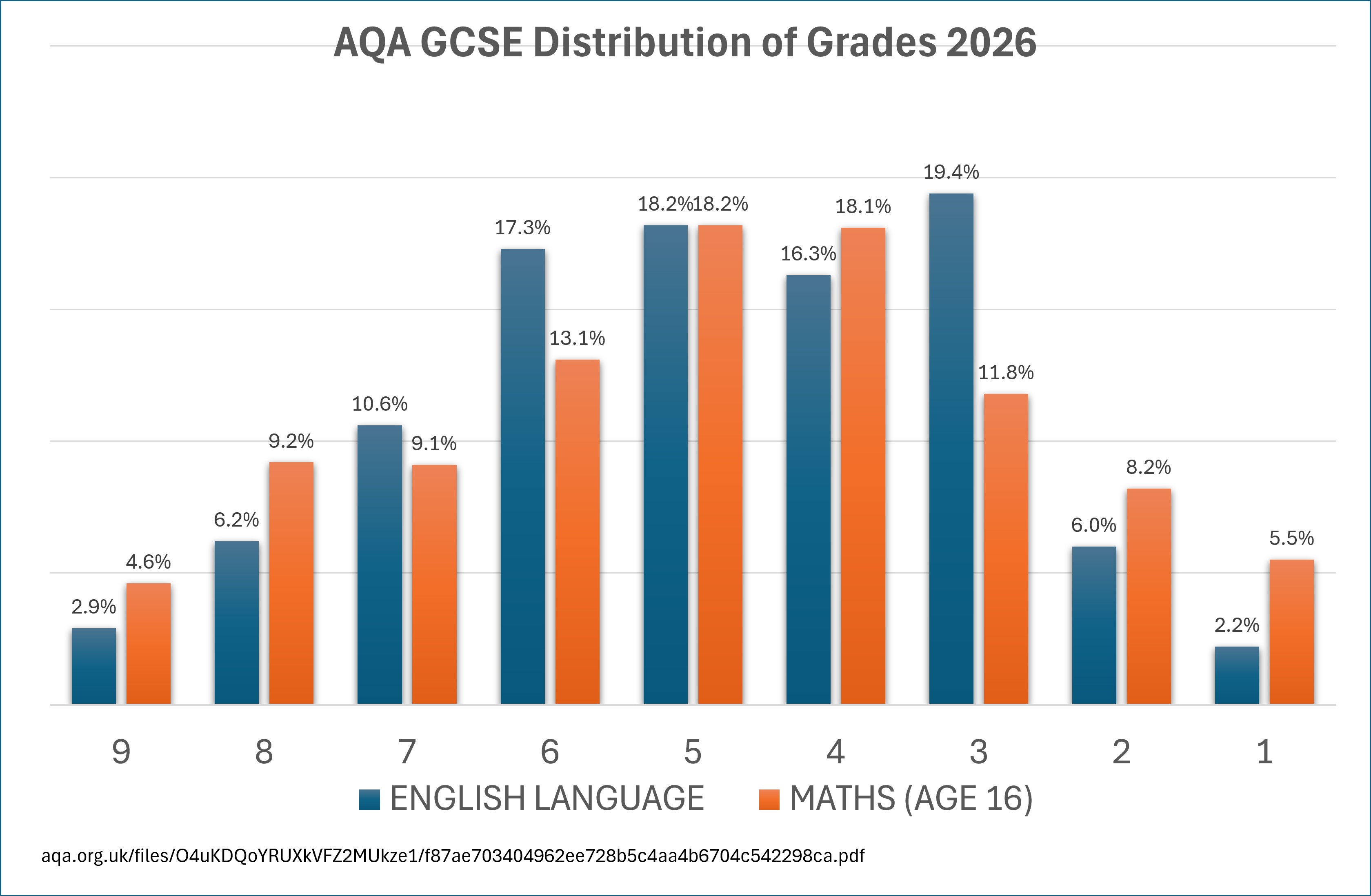
The higher percentage of English Language grade 4 near-misses also sheds light on the higher English resit pass rate, since a grade 3 student would be expected to have a better chance of achieving grade 4 in the resit. But this is only half the picture.
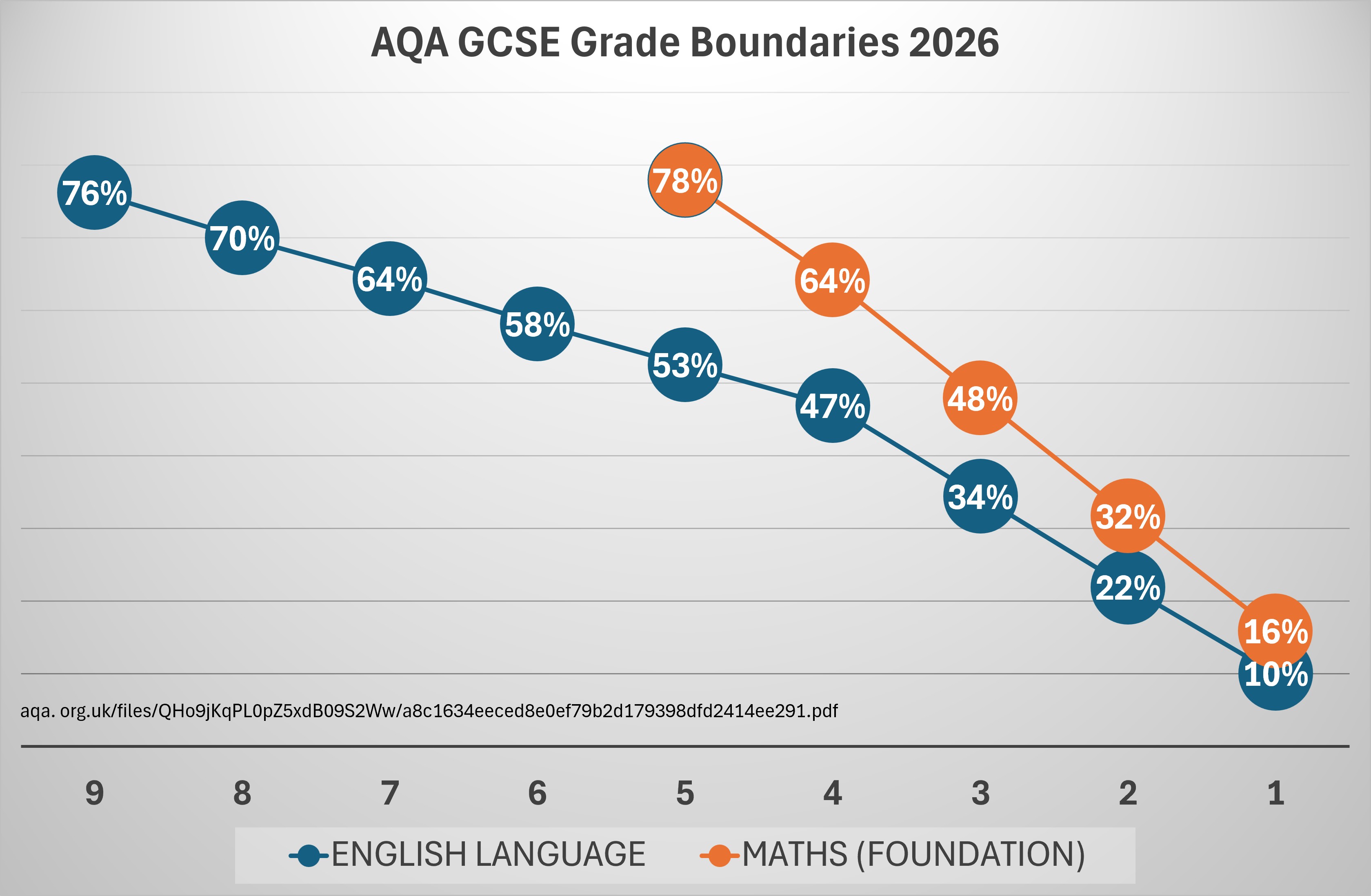
The other factor is the objective ease or difficulty of achieving grade 4 in GCSE English Language versus Maths. This summer’s AQA grade boundaries show that the English Language grade 4 pass mark (47%) is significantly lower than that for Foundation Maths (64%), implying that students find English a much harder exam. In fact, the English Language grade 9 boundary (76%) is below that for Foundation Maths grade 5 (78%), suggesting that English is indeed an unusually difficult exam for students.
Why Students Find GCSE English Language Difficult
What is it about GCSE English Language that presents particular difficulties for students? Unlike GCSE Maths and most other subjects (including English Literature), GCSE English Language is a subject that many students (and some teachers) feel unable to prepare for. You can either 'do' English Language or you can't. You rock up, sit down, read something, write something, and hope for the best.
In fact, GCSE English Language isn't simply a test of one's general ability to read and write English. It also requires specific skills in comprehending, analysing, comparing, and evaluating texts, and in composing coherent and technically accurate fictional and factual narratives. Moreover, the exam itself requires rigorous time-management discipline, because across the two papers there are 10 questions, each allocated a widely varying number of marks, from 4 to 40. It is all too easy to fall into the trap of writing too much for an 8-mark question and not leaving enough time to do justice to a 30- or 40-mark question.
Reducing the Difficulty
The good news is that this skill set and discipline can be taught, learned, and practised, so that when the exam comes around, the student has a clear idea of exactly what the examiner is looking for in the answer to each question and can confidently manage their time to optimise answer lengths to match the marks available. The difference between a grade 3 and a grade 4 or 5 student more often than not depends less on natural ability than on:
Approaching the exam effectively
Managing time well
Knowing what the question is really asking
Choosing the right quotes
Avoiding common mistakes that cost marks
The best and most effective way of acquiring and consolidating these skills is to work with an experienced GCSE English tutor who understands the mark scheme and knows exactly what the examiner is looking for in each question.
When to Invest in Tutoring
For the 10% of Year 11 candidates who are compelled to resit their English Language GCSE at the start of Sixth Form, this comes at a price. Their focus on getting to grips with their new A-level subjects will be diverted, and they may find that the timetable does not accommodate GCSE revision classes. In this case, the only recourse may be to invest in a GCSE English Language tutor to bring the student quickly up to speed with the techniques and disciplines required to achieve grade 4. It is far better to make that investment in the nine months before the May/June GCSE exams to avoid the trauma of failure and the inevitability of extra work and pressure that the subsequent resit necessarily entails.
[1] AQA is the largest GCSE exam board (with 60% coverage). Nationally, 41% of English Language and 43% of Maths GCSE entrants failed to achieve a grade 4 or above (FFT Datalab).
[2] FE Week, 8/1/26.
Parents
Students

Nick Y
Tutor
Engaging & effective GCSE English tutor highly experienced in simple techniques that transform students exam performance



Looking for a tutor?
Sherpa has hundreds of qualified and experienced UK tutors who are ready to help you achieve your goals. Search through our tutors and arrange a free 20 minute introduction through our industry-leading online classroom.
Find a TutorSimilar Articles
What are the Best Online Tutoring Websites?
Sherpa-Online, a new player into the game. Having only launched early 2020, Sherpa is well on its way to becoming a big name in the tutoring service industry.
Sebastian Owen
21st September
Going to Uni: The Complete Checklist!
Our complete guide for everything to bring to university including bedroom, bathroom, kitchen and study supplies. We've included survival tips for shared accommodation too!
Russell Kilgour
21st September