

GUEST POST
Why Evidence-Informed Science Education Matters: From Constructivism to Scientific Creativity
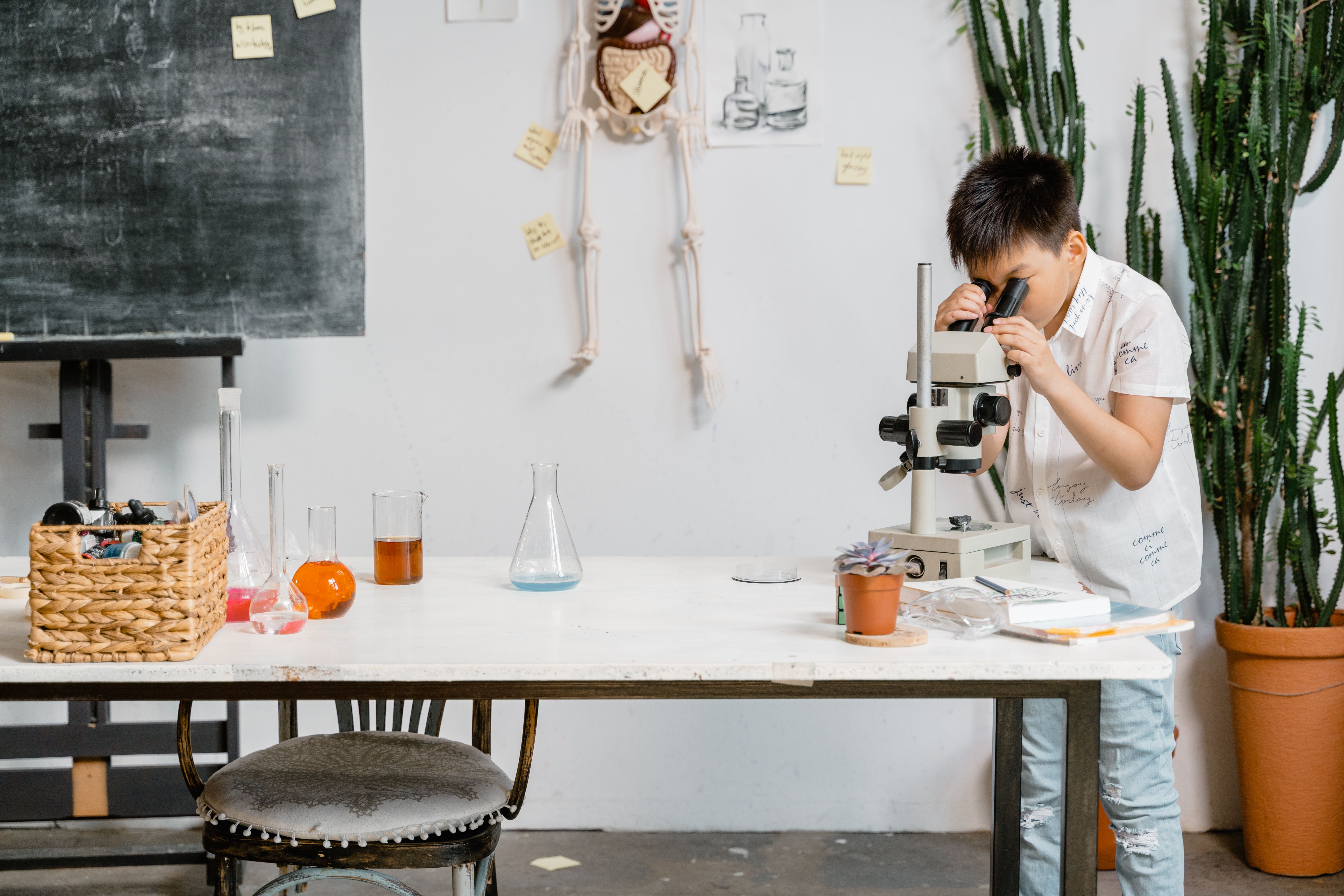
Saphire is a doctor and PGCE-qualified science teacher who tutors GCSE Biology and A-Level Biology using evidence-based methods and real-world clinical context. This article explains how evidence-informed approaches from constructivism (Piaget and Vygotsky) to Hong and Song’s model of scientific creativity can strengthen science learning and tutoring.
Why Evidence-Informed Science Education Matters: From Constructivism to Scientific Creativity
By Saphire R | Doctor and Qualified Science Teacher | Sherpa Tutor
Science education is at its best when driven by research into how the human brain processes, structures, and retains complex information. Grounding learning in cognitive science and evidence-informed pedagogy turns science from a list of facts to be memorized into a tool for critical inquiry and problem-solving.
The Power of Constructivism: How Students Build Understanding
Educational theory highlights Constructivism as a core pillar of deep learning - the principle that students must actively build mental models rather than passively absorb facts.
Cognitive Constructivism (Jean Piaget): Learning occurs when students encounter cognitive conflict - a gap between what they observe and what they expect. Confronting these gaps forces the brain to adapt and refine its understanding through assimilation and accommodation.
Social Constructivism (Lev Vygotsky): Knowledge develops through targeted dialogue and structured support within a student’s Zone of Proximal Development (ZPD) - the optimal space between what a learner can achieve independently and what they can master with expert guidance.
When applied in smaller settings - such as 1-to-1 tuition or home education - these principles allow for adaptive, highly responsive instruction tailored precisely to a student's cognitive pace
Cultivating Scientific Creativity: The Hong & Song Framework
While constructivism provides the structural framework for understanding, cultivating true scientific engagement requires fostering creativity. Research by Hong & Song on scientific creativity demonstrates that problem-solving is not an innate talent but a teachable cognitive skill developed through three key practices:
Problem Finding & Open Inquiry: Shifting focus from memorising correct answers to identifying why biological processes occur or how concepts in GCSE Physics explain physical phenomena.
Divergent & Flexible Thinking: Encouraging learners to evaluate multiple hypotheses or experimental approaches before selecting the most scientifically sound solution.
Cross-Domain Connections: Bridging abstract textbook concepts with real-world clinical, biological, and environmental applications.
Bridging Research and Practice
Integrating evidence-informed pedagogy - from Piaget and Vygotsky’s constructivist foundations to Hong & Song’s framework for scientific creativity - ensures that learners build genuine scientific literacy.
When science education combines pedagogical rigor, clinical real-world context, and structured scaffolding, students do not just prepare for exams - they learn how to think critically, question evidence, and solve complex problems.
Parents
Students

Saphire R
Tutor
Doctor & Qualified Science Teacher (MBChB, PGCE) – KS3 Science, GCSE & A-Level Biology – Medical School Interview Coach



Looking for a tutor?
Sherpa has hundreds of qualified and experienced UK tutors who are ready to help you achieve your goals. Search through our tutors and arrange a free 20 minute introduction through our industry-leading online classroom.
Find a TutorSimilar Articles
Why Start an Online Tutoring Job?
For teachers looking for part time work, private online tutoring is the obvious choice. It is incredibly quick and easy to get set up and then the job can be completed around your existing sc
Sebastian Owen
9th October
