

GUEST POST
Stealth Revision: A Parent’s Guide
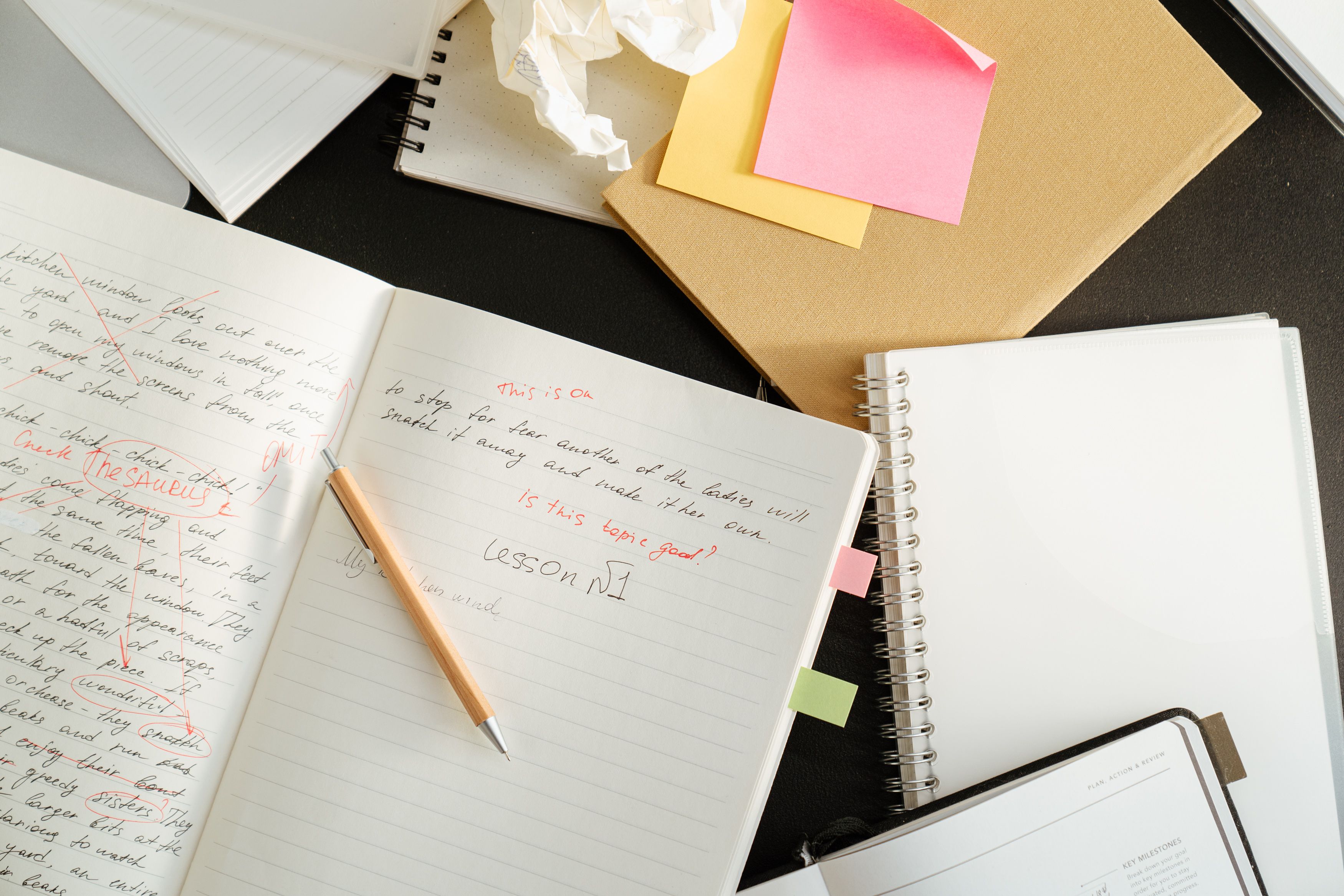
Owen specialises in GCSE English Language and A-Level English, as well as English Literature, focusing on clear structure, careful reading and precise writing. The article shows parents how small visual cues, spaced rotation and brief retrieval prompts around the home can nudge English Literature learning without turning evenings into extra schoolwork.
Stealth Revision: A Parent’s Guide
By Owen N | English Language and Literature Tutor | Sherpa Tutor
Your child has spent six hours at school being questioned, corrected, assessed, and reminded about what's due when. They arrive home, put down their bag, and make for the fridge.
Ambush awaits.
“How was school?”
“Fine.”
“What did you learn?”
“Nothing.”
“Have you got any homework?”
“No.”
The school portal suggests otherwise.
For parents wanting to help, this presents a problem. Teenagers can benefit from support at home, but turning the kitchen into an evening extension of school may encounter resistance.
Fortunately, helping doesn't always require another conversation about revision. A few small changes to what children see around the house can provide useful reminders without the need for another workbook.
1. Put Shakespeare in the Loo
There are few neutral zones where a teenager can be captured. The downstairs loo is therefore prime educational real estate.
Try putting up one picture connected to something they are studying.
For Much Ado About Nothing, for example, create or print an image of Beatrice and Benedick glaring at each other across a dinner table.
Underneath:
“I had rather hear my dog bark at a crow.”
And perhaps three words:
Banter. Pride. Love.
That's it.
There is some proper psychology behind this. Allan Paivio's research into dual coding suggests that information can become more memorable when verbal information is connected with imagery. Research into the picture superiority effect similarly shows that pictures can often be remembered better than words alone.
This does not mean a picture above the toilet will secure a Grade 9 in GCSE English Literature. It would be an unusually inexpensive education system if it did.
It may, however, make the quotation slightly more familiar.
2. Weaponise the Fridge
The same principle works elsewhere.
Take Dickens's festive classic A Christmas Carol. Instead of pinning up an entire revision sheet, use an image of Scrooge alone in his counting house, perhaps surrounded by Christmas festivities from which he appears completely detached.
Underneath:
Scrooge - isolated • miserly • transformed
Then leave him there.
Research into incidental learning suggests that repeated encounters with information can contribute to later learning, even when deliberately memorising it wasn't the person's primary task.
The important word, however, is small. Hansel and Gretel didn't follow loaves of bread.
Richard Mayer's research into multimedia learning gives us another useful rule: don't overdo it.
No need for an English department noticeboard beside the Cathedral City.
One image. An idea. Few words.
3. Send Them Something Ridiculous
Of course, your teenager may walk straight past your masterpiece without giving it a second glance.
Their phone presents a better target.
Instead of sending:
Have you done your English revision?
Instead, occasionally send an amusing visual representation of something they need to remember.
For Stevenson's The Strange Case of Dr Jekyll and Mr Hyde, an AI image generator could create an absurdly respectable Victorian gentleman - top hat, immaculate coat, perhaps an expression of unbearable propriety - casting the shadow of a monster.
Underneath:
Duality • repression • reputation
No explanation or question.
A memorable image attached to an important idea gives the concept something concrete to cling to.
4. Turn a Poem into a Picture
Poetry is particularly well suited to this approach, especially for A-Level English Literature students, because poets have already done much of the visual work for us.
Shelley's Ozymandias almost illustrates itself.
Imagine a colossal stone face lying broken in an apparently endless desert. Around it: nothing.
Underneath, just one quotation:
“Look on my Works, ye Mighty, and despair!”
The contradiction between the boast and the image does much of the intellectual work. The ruler claims permanence; the picture shows decay.
The parent hasn't shoehorned a soliloquy about irony, power, and human mortality onto the bangers and mash. The child 'happens' to encounter the relationship between them.
The same approach works with other poems. A frozen trench, an empty city street, a storm, or a battlefield can turn an abstract theme into something immediately visible.
5. Like Staring at Wallpaper
Leave anything on a wall long enough, and it blends into the background.
So rotate things.
This week, perhaps, the image is from An Inspector Calls: a prosperous family sitting around an elegant dinner table, with Inspector Goole standing at the door.
Underneath:
Responsibility • class • consequences
Next week, it disappears and something else takes its place.
This fits one of the most robust findings in learning research: spacing.
A major review by John Dunlosky and others identified distributed practice - returning to material across time - as one of the most effective general learning techniques.
The principle for parents is undemanding.
Don't add more. Change what's already there.
6. Occasionally Ask the Ten-Second Question
Passive exposure has limits. At some point, remembering something requires actually trying to remember it.
Research by Jeffrey Karpicke and others has repeatedly demonstrated the value of retrieval practice: attempting to recall information strengthens learning more effectively than simply rereading it.
Suppose the Inspector has been staring down from the fridge for several days.
You might occasionally ask:
“Why is he there?”
Then stop.
If they answer, excellent. If they don't, tell them.
Home Is Where the Heart Is
None of these ideas replaces proper revision. Students still need to read, write, practise exam questions, and retrieve information for themselves.
But parents don't need to become another teacher.
A picture on a fridge, an absurd WhatsApp image, or Shakespeare quietly occupying the downstairs loo can provide tiny encounters with important material throughout the week.
Some will be noticed. Some will be ignored. Some may become running family jokes.
And if your teenager eventually sits in an exam, sees a question about power, and unexpectedly remembers a ruined stone head that spent a week beside the cornflakes, the Blu Tack smears were worth it.

Owen N
Tutor
Here to help you succeed: 19 years delivering results in the UK, Hong Kong, and Italy in KS3, GCSE, A-Level,IB & SEND.



Looking for a tutor?
Sherpa has hundreds of qualified and experienced UK tutors who are ready to help you achieve your goals. Search through our tutors and arrange a free 20 minute introduction through our industry-leading online classroom.
Find a TutorSimilar Articles
10 Top Tips For Year 10!
Discover essential tips for a successful start to your GCSE journey in Year 10. From effective time management to subject research, the path to academic excellence begins here!
Russell Kilgour
9th October