

GUEST POST
Why Does Shakespeare Still Matter to Young People Today?
Katie is a qualified English Teacher specialising in AQA GCSE English Literature, with experience teaching and marking AQA Exams. This piece explores why Shakespeare’s plays still resonate with teenagers today, using Macbeth and Romeo and Juliet to show relatable themes and offer guidance on approaching the language and analysis for students of A-Level English Literature too.
Why Does Shakespeare Still Matter to Young People Today?
By Katie E | Qualified AQA GCSE English Teacher | Sherpa Tutor
It’s a fair question. He was writing more than 400 years ago, the language can be confusing, and most teenagers probably don’t see much of themselves in Scottish kings, sword fights, or wealthy families in Verona. But I think that’s also what makes Shakespeare so interesting. Once you get past the setting and the language, the people in his plays really aren’t that different from us.
They fall in love with people they probably shouldn’t. They get jealous. They worry about what other people think of them. They make stupid decisions because someone else has influenced them. They argue with their parents, want to fit in, and sometimes let ambition get the better of them.
The world has changed enormously since Shakespeare was writing. People, perhaps, haven’t changed quite as much.
Macbeth Is More Relatable Than You Might Think
I love Macbeth, partly because there is so much more to it than murder, witches, and becoming king. Obviously, I’m not suggesting that the average GCSE English student can relate to murdering a king to take his throne! But they can understand ambition. They can understand what it’s like to really want something, to feel pressure from someone else, or to make a decision and immediately wish they could take it back.
That’s what I find interesting about Macbeth. At the beginning of the play, he isn't simply presented as a horrible person. He knows that killing Duncan is wrong. He hesitates, and he changes his mind. Then Lady Macbeth challenges him, and he changes it back again. Once he has crossed that line, everything seems to unravel.
Lady Macbeth is probably one of my favourite characters to discuss for the same reason. It’s easy to meet her at the beginning of the play and decide she’s simply evil. After all, this is a woman asking the spirits to “unsex me here” while preparing herself for Duncan’s murder.
But then you get to the sleepwalking scene at the end, and suddenly, this apparently fearless character is desperately trying to wash imaginary blood from her hands. The woman who once told Macbeth that “a little water clears us of this deed” can't escape what she and Macbeth have done.
For me, that is when Shakespeare becomes much more than something you have to revise for an exam. You start asking questions about guilt, ambition, masculinity, and whether Lady Macbeth was ever as strong as she wanted everyone to believe.
And there isn't necessarily one perfect answer.
Then There’s Romeo and Juliet...
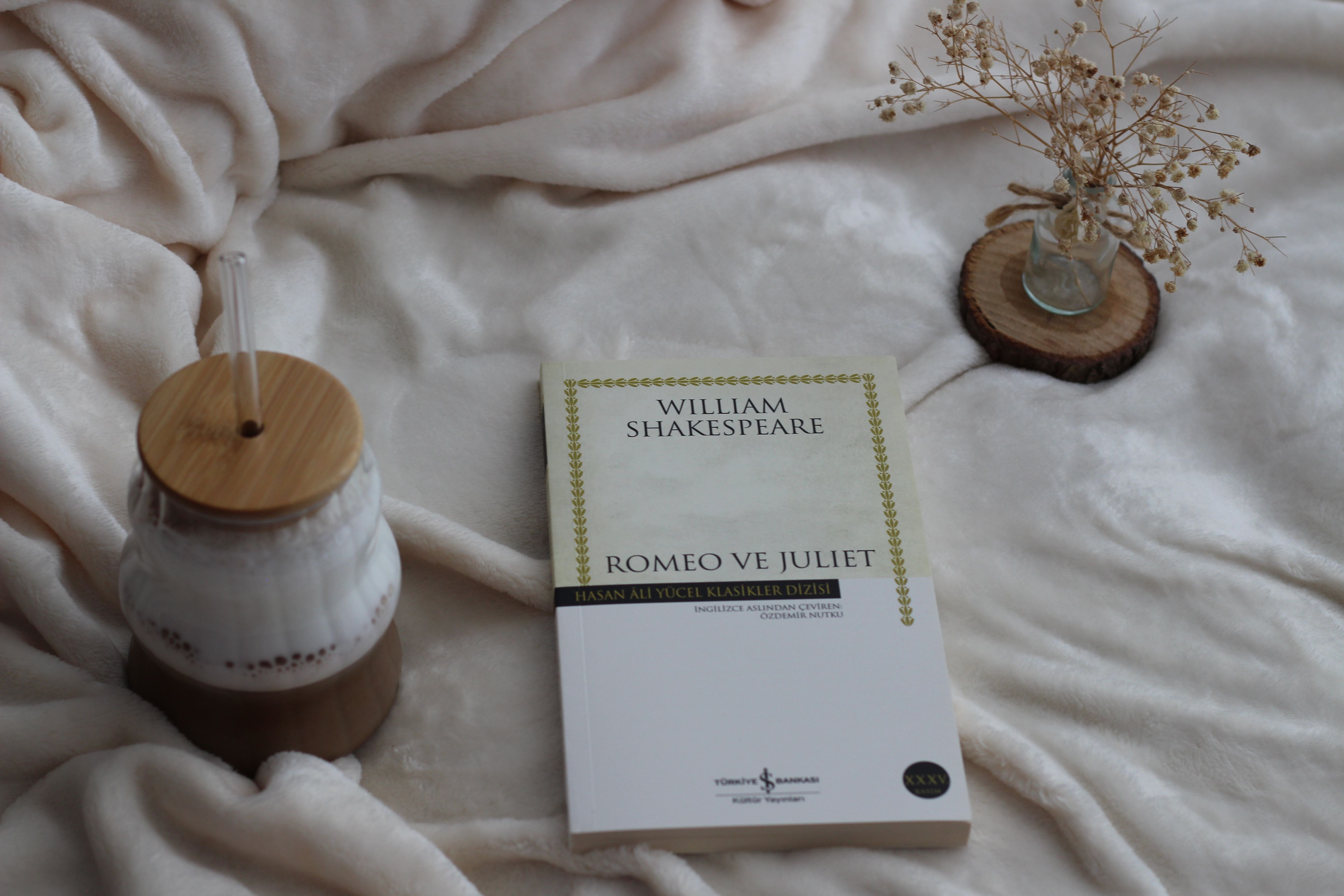
I think Romeo and Juliet sometimes gets reduced to “the play about two teenagers who fall in love and die”, which is a shame, because it is much messier - and much more fun - than that.
Romeo is ridiculously dramatic at times. Juliet is trying to work out what she wants while her family has very different ideas for her future. Their friends get involved. Their parents don’t understand them. Everyone acts on emotion, and several characters make decisions that seem sensible for about five minutes before going horribly wrong. That doesn't feel particularly ancient to me.
I also love that Shakespeare takes the feelings of Romeo and Juliet seriously. They're young, but their emotions aren't treated as though they don't matter. At the same time, they're growing up surrounded by a conflict they didn't create. The Montagues and Capulets hate each other, but we're never even given a proper explanation of what started the feud.
I think there’s something surprisingly modern about that. How often do people dislike another group because that’s simply what the people around them have always done?
“But I Don’t Understand What They’re Saying.”
This is probably the biggest problem students have with Shakespeare, and I completely understand it.
If you read a Shakespearean scene for the first time and have absolutely no idea what is going on, that does not mean you're bad at English. You're reading something written more than four centuries ago. Of course, some of it is going to feel strange.
I actually think one of the most satisfying parts of studying Shakespeare is the moment when it stops feeling quite so alien. You work out that a character is being sarcastic. You finally understand an insult that made absolutely no sense the first time you read it. You notice that all the references to blood in Macbeth probably aren't there by accident, and suddenly you're not just trying to translate the words into modern English. You're thinking about why Shakespeare chose them.
That’s where it gets interesting.
When I'm working through Shakespeare, I always think that understanding the people and the story should come first. If you understand that Macbeth is terrified by what he's considering, or that Juliet is furious with her parents, the language becomes much easier to explore. Starting with a complicated quotation and trying to memorise an analysis of it without really understanding the scene is far less useful.
I think one of the things that gets forgotten when we study Romeo and Juliet for an exam is just how beautiful some of the language actually is. We get so used to picking out metaphors and analysing individual words that it’s easy to forget to just appreciate the writing. Romeo calling Juliet “the sun” is such a simple example, but it says so much. She becomes the light in his world, something warm and almost impossible for him to look away from. When Juliet says her love is “boundless as the sea”, you really get a sense of how huge and overwhelming these feelings are for her.
That’s one of the reasons I love Shakespeare. He can take emotions that are actually quite difficult to put into words and somehow make them feel incredibly vivid. You don’t have to pull apart every single line to appreciate that. Sometimes a line is powerful simply because it’s a beautiful way of expressing something, and I think that can get a bit lost when Shakespeare is only ever approached as something students need to analyse for an exam.
You’re Allowed to Disagree With Shakespeare - and With Your Teacher
This is another reason I love English Literature. You don't have to look at a character and reach exactly the same conclusion as everyone else.
Is Macbeth a victim of the witches, or is he responsible for everything that happens to him? Is Lady Macbeth genuinely powerful at the beginning, or is she desperately trying to appear powerful? Are Romeo and Juliet victims of fate, their families, or their own impulsive decisions?
You can argue different things. The important part is being able to explain why you think so. And I think that's something students sometimes miss when they're worrying about finding the “right” interpretation for an exam. Some of the best discussions come from someone noticing something in a quotation that another person hasn't considered.
Shakespeare gives you an enormous amount to argue about. That's part of the fun.
So, Why Are We Still Studying Him?
I don't think every student has to love Shakespeare. Some won't, and that's completely fine. But I do think he deserves more of a chance than being dismissed as that old writer whose quotes I need to memorise for my GCSE. Because beneath all the unfamiliar language are stories about ambition, love, jealousy, insecurity, friendship, family, power, and wanting to belong. Once Shakespeare starts to make sense, studying his plays becomes much less about translating strange Elizabethan sentences and much more about understanding the characters behind them.
That's the part I love. Four hundred years later, we're still arguing about Macbeth. We're still debating whether Romeo and Juliet were foolish, reckless, or just unlucky. We're still finding new ways to perform the same plays and coming up with different interpretations of the same characters.
For someone who supposedly has nothing to say to young people today, Shakespeare has managed to keep us talking for a remarkably long time.
Parents
Students

Katie E
Tutor
Qualified English Teacher. AQA GCSE Language and Literature.



Looking for a tutor?
Sherpa has hundreds of qualified and experienced UK tutors who are ready to help you achieve your goals. Search through our tutors and arrange a free 20 minute introduction through our industry-leading online classroom.
Find a TutorSimilar Articles