

GUEST POST
Fascinating Case Studies for GCSE History
Which Case Studies Come Up in GCSE History Exams?
Three case studies that regularly appear in GCSE History exams are: Florence Nightingale (medicine, nursing reform and public health), the Great Stink of 1858 (government intervention and the 1875 Public Health Act), and the Edelweiss Pirates (youth resistance to Hitler in Nazi Germany). All three are applicable across AQA, Edexcel and OCR.
Why Case Studies Matter in History
Case studies can be focused on specific events, places, people or groups. They are useful for giving a more nuanced perspective on history rather than simply memorising facts. They bring topics to life, make content more relatable, and allow deeper engagement with the material.
The recall of change over time is often easier when it is anchored to stories and specific examples. Historical figures, events and actions become far more memorable when a student can connect with them on a human level rather than treating them as abstract facts to reproduce.
The three case studies here are applicable across all major exam boards and can be deployed in a wide variety of questions. All three have appeared in recent GCSE History exam papers. An overview of their themes and exam relevance is below.
| Case Study | Key Theme | Exam Relevance |
|---|---|---|
| Florence Nightingale | Medicine, nursing reform, role of women, statistics in public health | GCSE Medicine Through Time, Edexcel British Warfare, A-Level Health and the People |
| The Great Stink (1858) | Public health, government intervention, role of individuals vs the state | GCSE Medicine Through Time, impact of urbanisation, 1875 Public Health Act |
| The Edelweiss Pirates | Youth resistance to Hitler, limits of Nazi control, non-conformity and repression | GCSE Germany 1919-45, Edexcel Paper 3 Option 31, extent of Nazi opposition |
For students working specifically on source-based and historical environment questions, our guide on how to answer the Edexcel GCSE historical environment question covers the specific technique required for that type of task.
If you enjoy case study-based learning, the same approach works well across subjects. Our fascinating case studies for A-Level Psychology uses the same structure and is worth reading alongside this if you study both subjects.
Case Study 1: Florence Nightingale, The Lady with the Lamp

Florence Nightingale is perhaps the most well-known figure in British medical history. To many she is simply 'the Lady with the Lamp', a phrase that emerged from British newspaper reports in The Times during the Crimean War, depicting her on her nightly rounds carrying a lamp to care for wounded soldiers. The image was powerful enough to feature in a poem, Santa Filomena, by the American poet Henry Wadsworth Longfellow.
Her achievements appear across all major GCSE History courses and she is one of the most frequently examined individuals in Medicine Through Time.
Her Background and Path to the Crimea
Much to the horror of her upper-class parents, Nightingale trained to become a nurse at a time when nursing was not considered a respectable profession for women of her social standing.
In the absence of any nursing training in England at the time, she trained in Kaiserswerth, Germany. She later worked in London before being asked to lead a team of 38 nurses to the Crimea by the Secretary of War, Sir Sidney Herbert, who was a personal friend.
What She Found at Scutari
The picture that presented itself to Nightingale at Scutari was grim. Many wounded soldiers were dying of post-operative diseases rather than their original wounds. Staff were overworked and poorly trained. Patients lay on stretchers without adequate care or sanitation.
Although her understanding of disease causation was mistaken (she believed miasma, or foul air, caused illness), her attempts to clean up the filthy wards and improve ventilation did reduce mortality. In her Notes for Nursing she stressed that foul and musty air was a primary source of disease. It is worth noting, however, that the death rate at Scutari remained high until a government sanitary commission repaired the building's drainage, which had been constructed on top of a cesspool.
GCSE Exam Angle: Nightingale is often used as evidence for the role of the individual in driving medical progress. However, a sophisticated exam answer will acknowledge the limits of her impact at Scutari while recognising her longer-term contributions to nursing, hospital design and statistics. Examiners reward students who avoid over-simplifying her legacy.
Her Lasting Contributions
Nightingale's legacy extends well beyond the Crimea. Here is a summary of her key contributions:
| Achievement | Detail |
|---|---|
| Scutari (Crimean War) | Improved sanitary conditions, established food kitchens, washed linen, wrote home for soldiers, introduced reading rooms |
| Statistics | Used data to demonstrate the link between sanitation and mortality — elected first female member of the Royal Statistical Society |
| Nursing training | Used the Nightingale Fund (approx. £40,000) to establish St Thomas' School for Nursing in 1860, followed by a midwifery school in 1861 |
| Hospital design | Consulted on the design of new hospitals, leading to Nightingale wards with better supervision, natural light and ventilation |
| Publishing | Notes for Hospitals and Notes for Nursing (1859), translated into approximately 11 languages, became standard nursing training texts |
Her use of statistics was particularly significant. She was one of the first people to use data visualisation to argue for sanitary reform, and her election as the first female member of the Royal Statistical Society reflects the seriousness with which her work was taken in professional and political circles. This makes her relevant not just to Medicine Through Time but also to questions about the changing role of women in Victorian Britain.
Case Study 2: The Great Stink and the 1875 Public Health Act
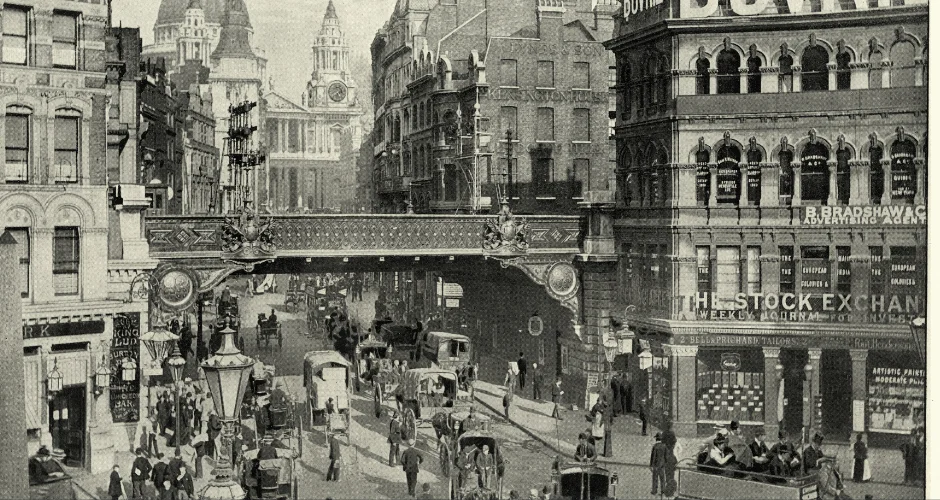
The Great Stink does not carry the same immediate name recognition as the Great Fire of London, but it is one of the most important events in the history of public health. For students studying Medicine Through Time or any unit covering urbanisation and government intervention, it is a pivotal case study.
London in the mid-19th century had grown to around 2.5 million people. Slum housing and inadequate infrastructure led to contaminated water supplies. Waste of every kind ended up in the Thames and its tributaries. The river was used simultaneously for drinking, washing and as a sewer. The government was aware of the problem but consistently put off the expense of addressing it.
The Context: Laissez-Faire and Inaction
Various cholera epidemics had already prompted the 1848 Public Health Act, but it achieved very little in practice because it was permissive rather than compulsory. Local authorities could act but were not required to. In 1849 the physician John Snow had already proved that cholera was waterborne, yet almost nothing was done to act on his findings. The prevailing laissez-faire philosophy of government kept intervention minimal.
GCSE Exam Angle: The contrast between Snow's discovery in 1849 and the inaction that followed until 1858 is an important one for exam questions about why change happens slowly in medicine. Use it to argue that scientific discovery alone is not sufficient for change. Government intervention and a catalyst event were both required.
The Summer of 1858
A scorching summer in 1858 brought things to a head. Temperatures stayed above 30 degrees for several weeks. Thames water levels dropped and the stench from the contaminated water became unbearable. Sewage was left exposed on the banks. The smell caused people to vomit in the streets and those who could afford to left the city.
Crucially, the smell affected the recently rebuilt Houses of Parliament, located directly beside the river, to the extent that moving parliament to a different location was seriously considered. The political embarrassment forced decisive action.
The Great Stink was memorably depicted by the political magazine Punch as a skeleton rowing across the Thames, a powerful image for visual learners and one that captures the public fear of contaminated water that was so widespread in this period.
| Date | Event |
|---|---|
| 1848 | First Public Health Act passed but largely ineffective due to being permissive rather than compulsory |
| 1849 | Dr John Snow proves cholera is waterborne, but the government takes no action |
| 1858 | Scorching summer: Thames levels drop, temperatures exceed 30 degrees for weeks. Stench from raw sewage becomes unbearable. Houses of Parliament affected |
| 1858 | MPs vote to fund a new underground sewage system, to be built by Joseph Bazalgette |
| 1875 | Bazalgette's sewer system completed. 1875 Public Health Act passed — the first compulsory act requiring local authorities to provide clean water and tackle drainage |
The 1875 Public Health Act was the direct legislative legacy of the Great Stink. Unlike the 1848 Act, it was compulsory. Local authorities were required to provide clean water, tackle drainage and improve sanitation. This represents a turning point in the relationship between government and public health in Britain.
Case Study 3: The Edelweiss Pirates
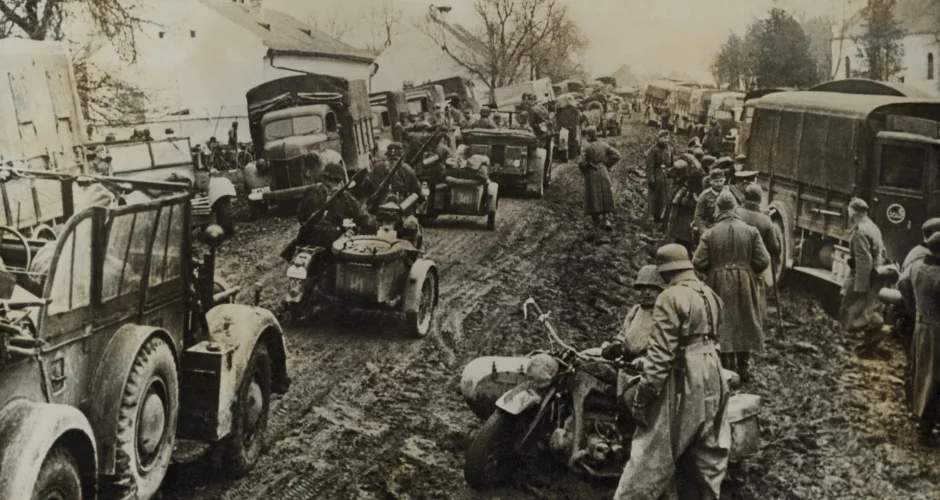
In October and November 1944, 13 people were publicly hanged by the Gestapo and the SS in a district of Cologne, Germany. Some were as young as 16. The hanging was witnessed by around 400 people. These were members of the Edelweiss Pirates.
Questions about youth resistance to Hitler have appeared in recent GCSE History exams, including Edexcel Paper 3 Option 31 in 2025. The Edelweiss Pirates are generally known to students, but the depth of understanding required to answer a question well goes considerably beyond basic recall.
Who Were the Edelweiss Pirates?
The Edelweiss Pirates were not a single unified organisation. They were an umbrella term for a range of loosely connected groups of young people who refused to conform to Nazi expectations and the compulsory Hitler Youth. They identified themselves with an edelweiss badge.
The best known subgroup were the Navajos, based in and around Cologne, and largely of working-class origin. Some members were also of Jewish background. In their early years, the groups were relatively low-key in their resistance.
They met informally, played music including guitar, went on weekend hikes, and dressed in ways that deliberately defied the expected norms. Their exact numbers are unknown, but Gestapo documents list up to 3,000 boys and girls as members.
The fact that they were closely monitored and some were arrested and tortured is itself significant: even the Gestapo took them seriously enough to surveil them extensively.
GCSE Exam Angle: A common mistake is to dismiss the Edelweiss Pirates as harmless because they were 'just teenagers'. The public hanging of 13 members in 1944 reveals the opposite: the Nazi regime clearly felt threatened by them. Use this to argue that their significance grew over time and that even non-violent non-conformity represented a genuine challenge to totalitarian control.
Escalating Resistance
The Edelweiss Pirates did not remain purely passive. In the Ehrenfeld district of Cologne, many of these young people worked alongside an escaped former concentration camp prisoner. Hidden in the basement of a house, he and others offered shelter to Jews and other escapees. As the war progressed, the group became significantly more radical.
By the later stages of the war their activities included:
- Active sabotage and guerrilla tactics aimed at forcing an earlier end to the war
- Direct confrontation with the Gestapo and the Hitler Youth
- Leafletting campaigns to turn public opinion against the Nazi regime, similar to the White Rose movement
- Attacks on explosives at key locations including train stations and arms depots
- In October 1944, responsibility for the murder of five individuals including police officers and the local Gestapo chief
The 1944 crackdown saw 63 people arrested, including 19 young people, many belonging to the Edelweiss Pirates, leading to the public hanging of 13 without trial. This outcome tells us that this initially nonconformist group had evolved into a genuinely serious political and operational threat by the end of the war.
For many years the Edelweiss Pirates received little public recognition. Their story is now commemorated in Cologne, a film was made about them in 2005, and local museums in the city offer detailed accounts of their activities. A graffitied train station associated with the group and the site of the public hanging remain points of historical memory in the city today.
GCSE Exam Angle: The Edelweiss Pirates can be used in questions about the extent of opposition to Hitler, the limits of Nazi control, and whether the Nazi state was a monolithic dictatorship or a regime that faced genuine internal resistance. Their development from low-level non-conformity to active resistance is a useful model for discussing how opposition could escalate under a totalitarian regime.
Conclusion: Using Case Studies in Your Exam Answers
Each of the three case studies covered here offers something beyond a set of facts to memorise. They illustrate how change happens (and how it is resisted), the role of individuals and events as catalysts, and the limits of government action or inaction over time.
The most effective use of a case study in an exam answer is to deploy it as specific, named evidence that directly supports a broader argument. A reference to Nightingale using statistics to drive sanitary reform, or the public hanging of 13 Edelweiss Pirates without trial, carries far more weight than a vague claim about 'people who opposed Hitler' or 'reformers in the 19th century'.
For revision strategy around this kind of content-heavy subject, the science of effective revision covers the memory techniques best suited to retaining complex historical narratives. And for building a structured plan across all your subjects, the ultimate revision timetable guide gives you a practical framework to work from.
If you are working through GCSE History and would benefit from one-to-one support developing your essay technique and case study knowledge, a GCSE History tutor or A-Level History tutor can help you identify exactly where marks are being lost and build the analytical habits that lead to top grades.
Parents
Students
Heike W
Tutor
Helping students achieve History & RS - tailored lessons, major exam boards, senior examiner, SEN experience



Looking for a tutor?
Sherpa has hundreds of qualified and experienced UK tutors who are ready to help you achieve your goals. Search through our tutors and arrange a free 20 minute introduction through our industry-leading online classroom.
Find a TutorSimilar Articles