

GUEST POST
How Should We Be Teaching Science?
Iñigo is a Master's of Physics graduate with First Class Honours in Theoretical Physics, Qualified Teacher Status, and tutoring experience spanning Mathematics and Physics and Combined Science from secondary level through to university.
Here, he draws on key educational research to explore how science should really be taught and what concepts like science capital, mental schemas and scientific identity mean for students and teachers in practice.
What the Research Actually Says About How We Should Teach Science
By Iñigo | Physics and Maths Tutor | Master's in Theoretical Physics | Sherpa Tutor
The process of teaching science is vastly complex, and many factors must be considered.
While the content is extremely important, there are other processes that are vital, such as the myriad skills associated with the subject, or the 'scientific identity' (Archer et al., 2015).
This article will review some literature on this topic while trying to answer the question:
How should we teach science?
What the Research Says: Rosenshine and the EEF
Several authors have given "recipes" on how to master the discipline of teaching. One example is Barak Rosenshine (2012) and another is the guide written by John Holman and Emily Yeomans (2018) from the Education Endowment Foundation (EEF), which focuses on science. Both of these reports emphasise important measures such as modelling, encouraging self-regulation, and exercising memory.
All of these are crucial in building mental 'schemas', webs of knowledge that act as the basis for further learning. Modelling, as described by the EEF (2018), creates a structure inside students' minds and is useful for linking more memorable things like images (iconic representation) to complex concepts (symbolic representation) (Bruner, 1966, cited in Bruner's Theory of Learning, Saul McLeod, Simply Psychology, 2023).
As explained by the EEF (2018), self-regulation allows students to evaluate their methods and mental processes, making them aware of their effectiveness and also deepening their understanding of the subject.
Furthermore, reviewing concepts regularly strengthens the connections in long-term memory, a key habit for GCSE Combined Science courses, and therefore working memory can be less saturated or overloaded (Rosenshine, 2012, p. 13).
Where the Research Disagrees: Mistakes and Misconceptions
The authors disagree slightly when discussing mistakes and misconceptions. While Rosenshine (2012) highlights the importance of having a high success rate for students to build knowledge on correct information, the EEF paper suggests that misconceptions are important for prompting student reflection.
One could say that Rosenshine does not give importance to students' prior knowledge, in contrast to the EEF. From both perspectives, asking questions is said to be crucial, since this is a tool not only for students' self-regulation but also for teachers to know where students stand.
As previously mentioned, Archer et al. (2015) describe the concept of 'science identity' when discussing the topic of 'science capital'. Bourdieu (1986) introduced capital as a form of resource that is exchangeable and can either further or reduce societal inequalities.
Science Capital and Scientific Identity
Science capital in particular is a combination of knowledge and skills associated with science and its practice, which Archer et al. (2015) consider extremely valuable; students with more access to it have an advantage over those who do not.
Following this argument, teachers should try to encourage students to acquire more capital by consuming scientific media, engaging in scientific conversations more often, and learning about possible career paths.
I believe that these measures are important, and, in particular, boosting students' science identity (the degree to which a person thinks other people see them as a "science person") can help get rid of the negative stigma that science people may have of being "a geek".
These measures allow students to benefit from being scientifically literate, which is of national priority (Archer et al., 2015, p. 926).
However, there are several points to cover about being scientifically literate, since there is a difference between learning science, learning about science, and "doing science" (Derek Hodson, 2014).
Learning Science, Learning About Science, and Doing Science
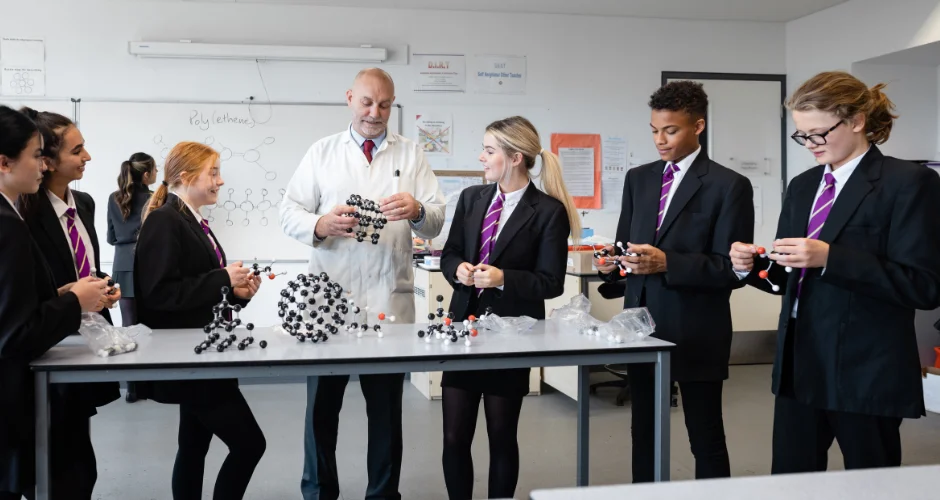
Briefly, learning science refers to the content itself (e.g., the 'cells' topic in GCSE Biology), learning about science entails knowledge about the skills, history, mental strategies, and conventions that surround the subject. It is a deeper understanding of how a scientist's mind works.
Lastly, doing science involves the act of mimicking the steps that scientists take when doing any kind of research. This is a broad concept because it encompasses both experimental and theoretical methods in all branches of science, including GCSE Physics.
When students are doing science, they shouldn't strictly follow the teacher's orders on how to do a practical session; this is not what scientists do. Rather, there is a combination of theoretical and experimental procedures that students must follow according to their own judgment, which will lead them to certain experiments, interpretations, and conclusions.
What, then, is the role of the teacher in this scenario? Well, they should equip students with the necessary prior knowledge 'on' and 'about' science (subject knowledge, critical thinking, problem-solving, etc.) so that, in the moment of 'doing science', teachers act only as a fellow scientist who can give feedback and ideas but must always let the student follow their own path.
Reflections and Takeaways
These papers gave me a better understanding of what strategies I could follow in my journey as a teacher, as well as showing me vital concepts like 'science capital' and 'mental schema', which I will try to apply in my lessons.
It has made me reflect on what 'doing science' really is and reconsider my previous thoughts on this. I feel more resourceful and prepared after this reading exercise.
References
Archer et al. (2015), '"Science Capital": A Conceptual, Methodological, and Empirical Argument for Extending Bourdieusian Notions of Capital Beyond the Arts', Journal of Research in Science Teaching, Vol. 52, No. 7, pp. 922-948
Bruner, J. S. (1960). The Process of Education. Cambridge, Mass.: Harvard University Press.
Emily Yeomans and John Holman (2018), Improving Secondary Science, Education Endowment Foundation guidance report. London: Percipio.
Rosenshine (2012), "Principles of instruction: Research-based strategies that all teachers should know." American Educator, pp. 12-19.
Parents
Students
Tutors

Iñigo
Tutor
Master of Physics, offering Maths and Science lessons



Looking for a tutor?
Sherpa has hundreds of qualified and experienced UK tutors who are ready to help you achieve your goals. Search through our tutors and arrange a free 20 minute introduction through our industry-leading online classroom.
Find a TutorSimilar Articles