
GUEST POST
GCSE Maths: The Most Common Mistakes Students Make and How to Avoid Them
Alan is an experienced GCSE Maths tutor who has delivered thousands of 1:1 lessons across all major exam boards. In this article, he outlines the most common GCSE Maths mistakes and practical ways to avoid them, from neat, step-by-step working and a Common Mistakes document to smarter calculator use and time-saving exam technique.
GCSE Maths: The Most Common Mistakes Students Make and How to Avoid Them
By Alan H | Experienced GCSE and A-Level Maths Tutor | Sherpa Tutor
When preparing for GCSE Maths , hard work is one of the most important factors in achieving your target grade. However, what's just as important is working smart. Having taught thousands of GCSE Maths lessons, I've noticed common mistakes that students make each year, even when they have a strong understanding of the topics they are studying. The good news is that there are practical techniques that can help prevent these mistakes and improve exam performance.
In this article, I'll explore four common types of mistakes and share some of the most effective techniques for avoiding them.
1. 'Silly' Errors
'Silly' errors are probably the most common mistakes students make in Maths. These might include accidentally changing a negative sign to a positive, copying a number incorrectly, making an arithmetic mistake, or misreading a question.
First, it might make you feel better to know that making 'silly' errors is completely normal. Students, teachers, and even examiners are all capable of making them. Maintaining concentration throughout an entire exam paper is challenging, and occasional mistakes are inevitable. However, there are techniques you can use to minimise these errors.
How to avoid them: The first and most important technique for avoiding silly errors is to set your working out as neatly and clearly as possible, showing every step. You might have heard your teachers tell you this many times, but there's a very good reason behind it! A nice trick is to imagine you're writing the worked solutions for a textbook or teaching the topic to somebody else.
This might seem time-consuming initially, but it can actually save you time by preventing mistakes that would otherwise require you to redo your work. Remember, the strongest students often develop a natural flow to their working, with each step following clearly from the previous one.
Another useful technique is to use brackets frequently, particularly when working with negative numbers. Brackets help keep your calculations organised and make it easier to keep track of positive and negative signs. Similarly, on calculator papers, use your calculator as much as possible, and avoid unnecessary calculations in your head. You're more likely to make a silly error when calculating mentally, so let your calculator do the work for you!
2. Repeated Errors
Making mistakes while revising is completely normal. In fact, mistakes can be incredibly useful because they highlight areas where you need to improve. However, what's even more important is to learn from those mistakes, and there are practical methods you can use to do exactly that.
When revising, students might complete a question incorrectly, look at the mark scheme to see the right method, and then simply move on. However, the problem is that they expect themselves to remember that mistake several weeks or months later. Looking over an error once doesn't necessarily mean you'll avoid it in the future. Without a proper system, students can find themselves making the same errors repeatedly.
How to avoid them: One of the best techniques, which I regularly recommend to my students, is creating a Common Mistakes Document. This is a document you can create in any note-taking software or word processor, where you record mistakes you think you might make again.
Organise these errors by topic, and over time, you'll build a list of your own personalised mistakes for each topic in the GCSE course. These can range from small arithmetic errors to more complicated misunderstandings.
Whenever you make a mistake during revision or a test, write down what went wrong, perhaps include an example, and explain the correct approach. This can be as short as one or two lines.
The most important thing is to review those mistakes regularly, because if you do, you'll become really good at spotting those same mistakes when doing future questions. I'd recommend starting as early as possible in Year 10 or Year 11, allowing your document to grow over time.
3. Calculator Errors
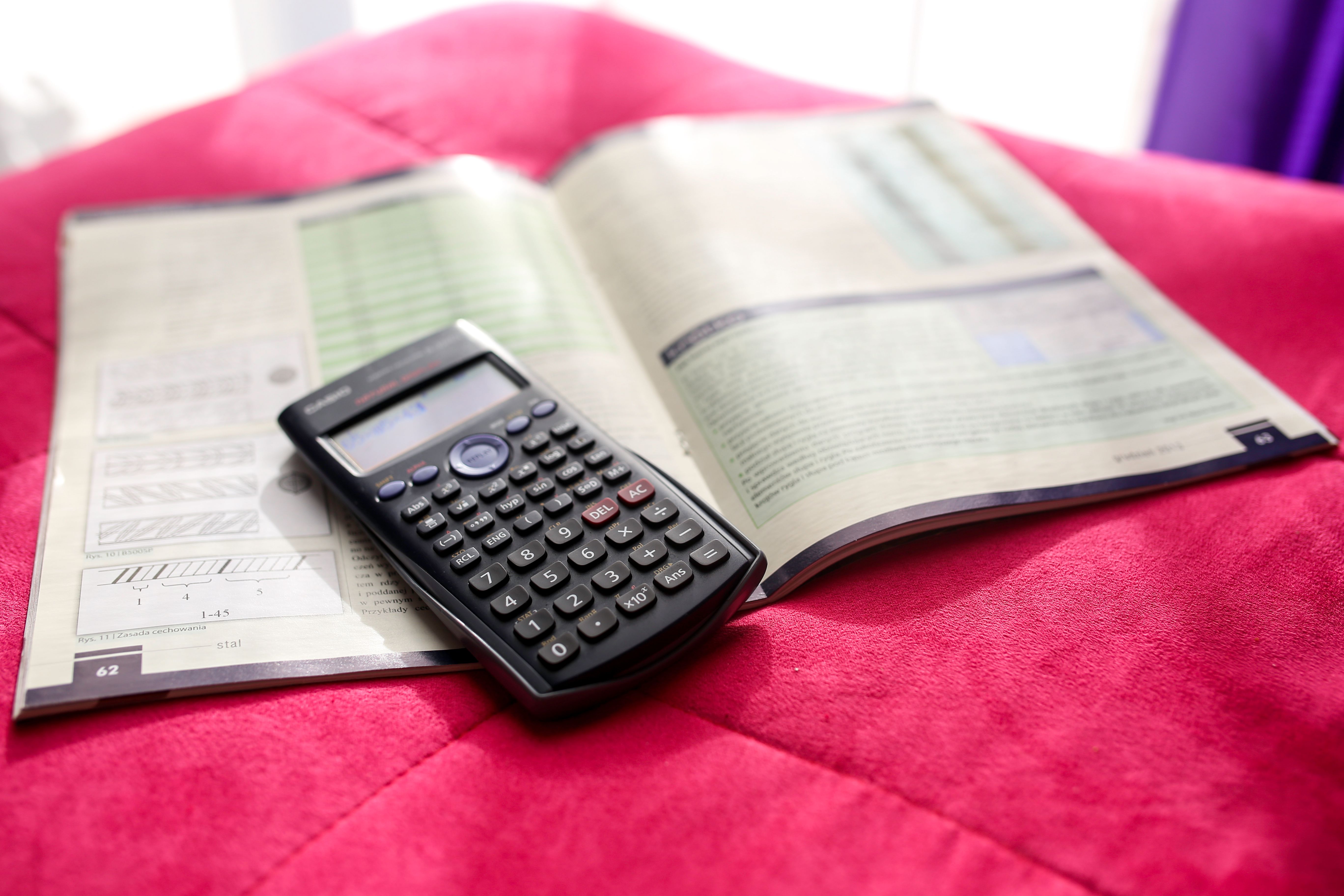
Calculators are incredibly useful in GCSE Maths exams, but it's surprisingly common for students to make mistakes when using them. Even when you understand the Maths perfectly, a small calculator mistake can lead to an incorrect answer. That's why it's important to become familiar with your calculator and confident in using its features.
How to avoid them: My first recommendation is to spend some time learning how your calculator works. You don't need to understand every advanced feature, but knowing the functions relevant to your GCSE can make a significant difference. There are excellent YouTube tutorials explaining the features of popular GCSE calculators.
One technique I particularly recommend is using your calculator's memory functions. For example, if you get an answer with lots of decimal places and need to use it again later, you can store it in your calculator's memory and recall it when needed. This avoids having to re-enter long numbers or round too early.
Once you're familiar with your calculator's functions, there are also some simple tricks that can make a big difference. For example, when entering calculations, use brackets frequently, especially around negative numbers. Another useful technique is to enter longer calculations into your calculator all at once, rather than breaking them into several smaller calculations. This allows your calculator to do everything in one go, reducing the number of steps and the chances of making a mistake along the way.
Finally, learn what your calculator's error messages mean. A Syntax ERROR usually means you've typed something incorrectly, such as missing a bracket. A Math ERROR can mean you've tried to do something mathematically impossible, such as dividing by zero. Understanding these messages can help you identify problems quickly.
4. Exam Technique Errors
Exam technique is one of the most important parts of GCSE Maths, particularly when it comes to time management. This is why having a clear strategy is so important.
How to avoid them: One of my favourite exam techniques is what I call the Circle Technique.
The idea is simple. Start at the beginning of the paper and work through the questions at a comfortable pace, without rushing. Whenever you come across a question you're struggling with, circle its number and move on. This might be a question you're completely stuck on, one where you're unsure how to continue, or even one you've finished but aren't confident in your answer.
The important thing is not to spend too long on any single question. Don't worry if you end up with lots of circled questions. They're simply reminders of which questions to return to later.
Once you've reached the end of the paper, look back at the questions you have circled and re-attempt them, one at a time, starting with the questions you feel most confident about.
For example, if you've circled eight questions, choose the three you feel most confident about and attempt those first. Try to get as far as you can, showing your working to earn as many marks as possible. Once you've given your best attempt, cross the circle off and move on to the next. Repeat this process with the remaining circled questions.
This technique helps you secure the marks you're most capable of earning before spending your remaining time on more difficult questions. Rather than getting stuck early in the paper, you're making the best use of the time available.
Conclusion
Success in GCSE Maths comes from consistent practice, good habits, and the right approach to revision. Remember, working hard is important, but working smart is just as valuable.
Good luck with your exams!
Parents
Students

Alan H
Tutor
Experienced GCSE & A-Level Maths Tutor – Free Trial Lesson


Looking for a tutor?
Sherpa has hundreds of qualified and experienced UK tutors who are ready to help you achieve your goals. Search through our tutors and arrange a free 20 minute introduction through our industry-leading online classroom.
Find a TutorSimilar Articles